.png)
.png)
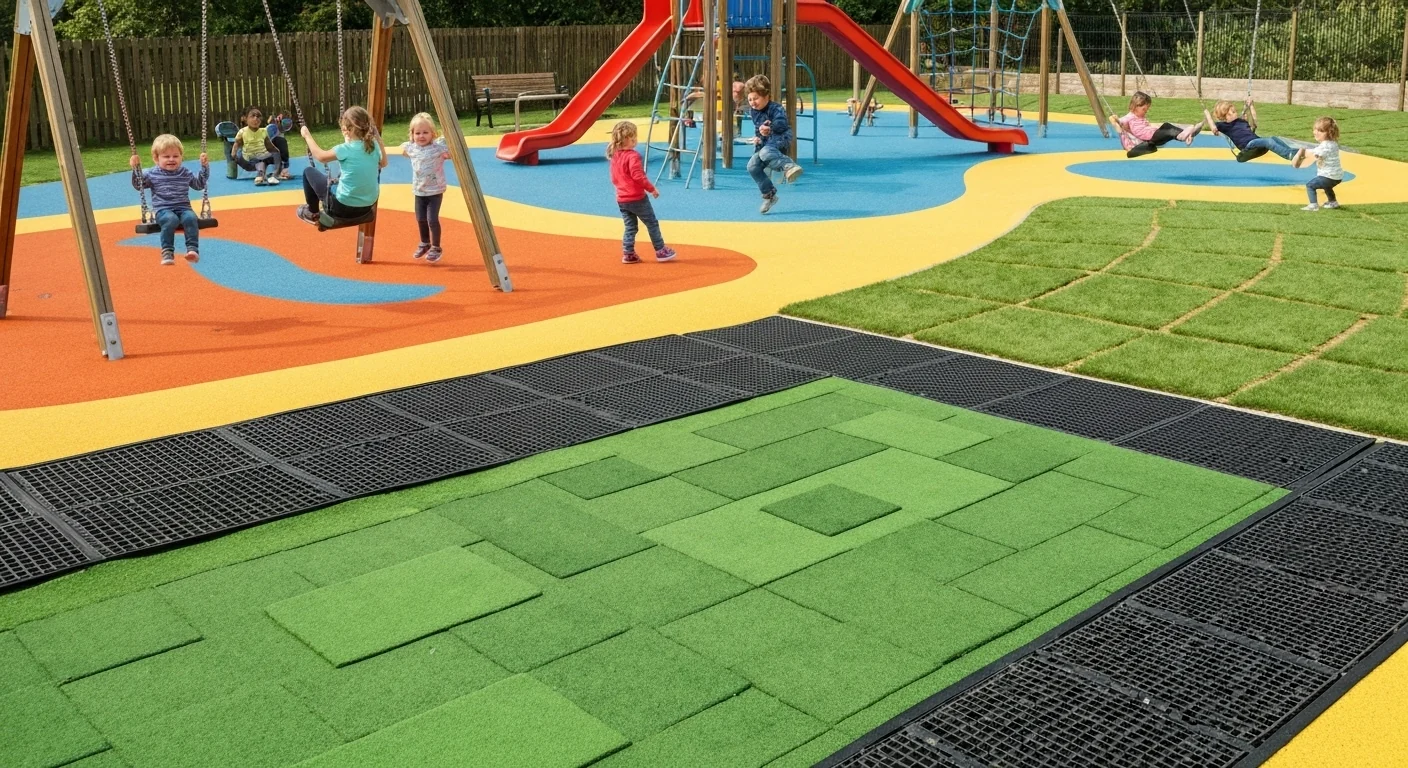
Parents across the Dallas-Fort Worth area constantly weigh the tradeoffs between different play surface options for backyard play structures — mulch that scatters and needs constant replenishing, sand that tracks into the house and attracts insects, or natural grass that turns to mud or dies out entirely under a swing set's heaviest traffic areas. Playground turf offers a genuinely different solution, one designed specifically around safety, durability, and low maintenance for the areas kids actually use most.
Why Standard Turf Isn't the Same as Playground Turf
Not all artificial turf is designed with the same safety standards in mind. Playground-specific turf systems are engineered with impact attenuation in mind, meaning they're built to cushion falls in a way that standard landscape turf isn't necessarily designed to do. This typically involves a shock-absorbing padding layer installed beneath the turf itself, rated for the fall heights associated with typical play equipment.
Understanding Fall Height and Safety Ratings
Play surface safety standards are generally based on the critical fall height of nearby equipment — essentially, how far a child could fall from the highest accessible point of a play structure. Properly designed playground turf systems account for this fall height when selecting the appropriate padding thickness underneath the turf, providing meaningfully better protection than a standard turf installation without this consideration.
Why DFW Families Are Moving Away From Mulch and Sand
Mulch requires regular replenishment as it breaks down, compacts, or gets scattered by regular play, while consistently harboring insects and occasionally splinters depending on the material used. Sand tracks into homes, requires raking to redistribute after play, and can develop drainage issues that leave standing water after North Texas rain. Playground turf eliminates most of these recurring maintenance demands while providing a consistently soft, clean surface underfoot.
Heat Considerations for DFW Playgrounds
Given how much time playground surfaces spend in direct Texas sun, heat management matters significantly for surfaces kids will be playing on with bare feet and hands. We select turf products and fiber types specifically suited to reducing heat retention, and proper installation with adequate infill helps regulate surface temperature better than lower-quality turf products designed without our climate in mind.
Drainage Beneath Play Areas
Proper drainage is especially important under playground turf, since standing water beneath the surface can compromise both the padding layer's performance over time and create an unsanitary environment. We design the base and drainage system specifically to handle North Texas rainfall patterns, keeping the play surface dry and usable shortly after storms pass.
Maintaining a Clean, Sanitary Play Surface
Unlike mulch or sand, playground turf can be more easily kept clean of debris, and doesn't provide the same hiding spots for insects or the moisture retention that can lead to mold or bacterial growth in organic surface materials.
Why Professional Installation Matters for Safety
Playground turf installation isn't purely cosmetic — the padding layer, drainage, and overall system need to be installed correctly to actually provide the safety benefits the product is designed for. An improperly installed system can look fine on the surface while failing to provide adequate fall protection underneath.
The team at Kingswood Turf installs playground turf systems across DFW designed to give kids a safer, cleaner, lower-maintenance play surface than traditional mulch, sand, or grass alone can offer.

Ready for a safer play surface for your kids? Reach out to Kingswood Turf today.


.svg)
.svg)