.png)
.png)
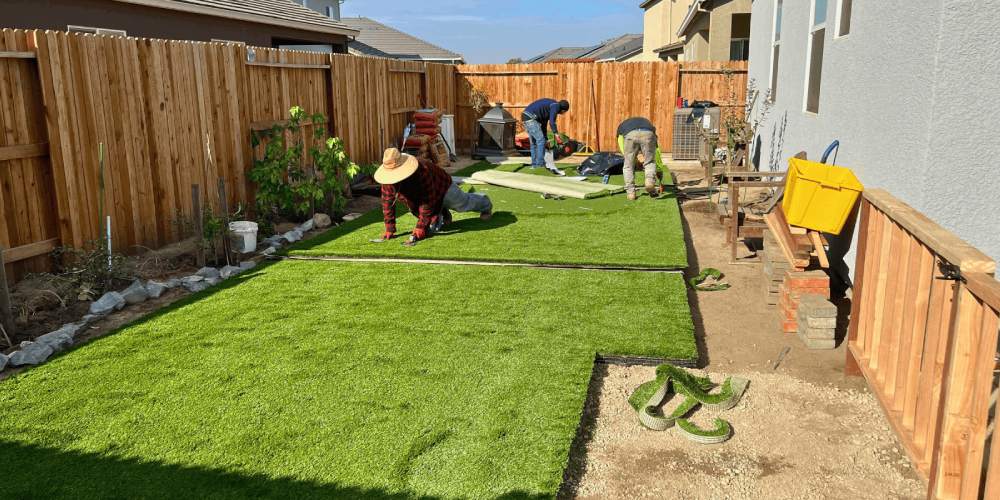
Artificial turf is built to last, but it's not built to last forever. Whether it was installed by a previous homeowner, a lower-quality contractor, or has simply seen 15-plus years of DFW sun and heavy use, older turf eventually starts to show it — matting down, fading, or losing the realistic look it once had. When that happens, turf removal and replacement is usually the right call.
Patching a small section of worn turf almost always creates a visible mismatch — new turf next to older, faded turf rarely blends seamlessly. A full removal and replacement gives homeowners a fresh, uniform lawn rather than a lawn with an obvious patch.
Turf replacement starts with removing the old turf and inspecting the base underneath. In many cases, the original base has settled or degraded over the years, which means it needs to be re-compacted or rebuilt before new turf goes down — a step that's easy to skip but critical for making sure the replacement lasts as long as it should.
Once the base is properly prepped, new turf is installed using the same precise process as a first-time installation: seaming, infill, and power brushing for a polished, natural-looking finish.
Turf replacement is also an opportunity to upgrade. Artificial turf technology has improved significantly over the past decade — better drainage systems, more realistic blade shapes, and improved UV resistance are all standard on modern turf products, meaning a replacement often performs noticeably better than what it's replacing.
High-quality artificial turf can last 15 to 20 years with proper installation and care. If your lawn is showing significant wear well before that timeline, it's often a sign that the original installation — particularly the base — wasn't done to the standard it should have been.

If your turf isn't looking like it used to, a full replacement can bring your lawn back to the flawless look it had on day one. Book your free estimate and let's talk about refreshing your space.


.svg)
.svg)