.png)
.png)
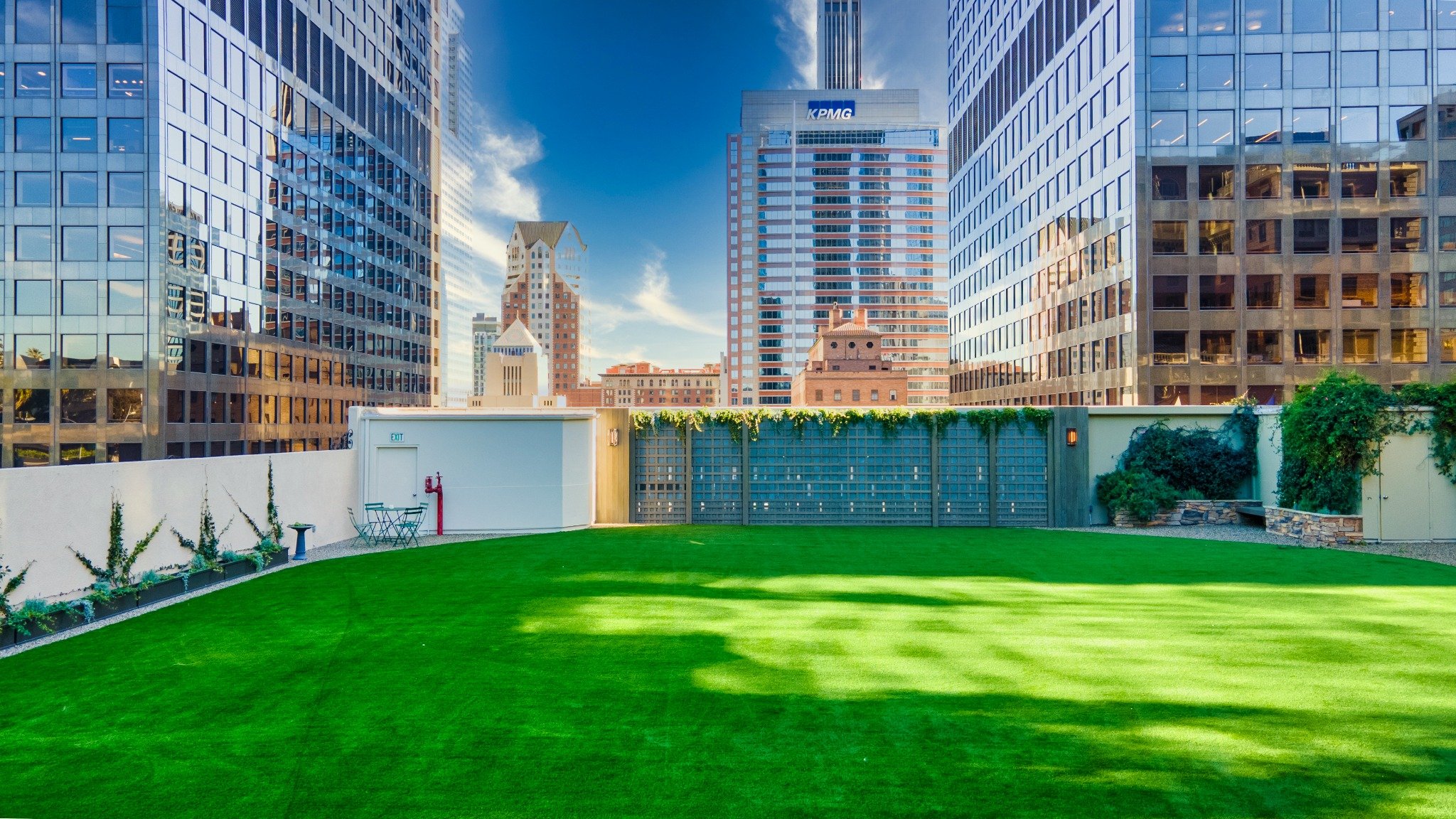
Artificial turf has moved well beyond residential backyards, and across the Dallas-Fort Worth area, businesses are increasingly turning to commercial-grade turf installations for a range of practical and aesthetic reasons. Understanding where commercial turf actually makes sense, and what makes it different from residential turf, helps business owners and property managers evaluate whether it fits their specific property.
Why Businesses Are Choosing Turf Over Natural Grass
Maintaining natural grass across a commercial property requires ongoing labor costs for mowing, watering, fertilizing, and pest control, all of which add up significantly over time, especially across larger commercial lots. Artificial turf eliminates most of this recurring maintenance expense while providing a consistently green, well-maintained appearance year-round, which matters for businesses where curb appeal and professional presentation directly affect customer perception.
Common Commercial Applications We See Across DFW
Office parks and corporate campuses often use turf for common areas and entryway landscaping where consistent, low-maintenance appearance is a priority. Retail centers benefit from turf's durability under heavy foot traffic near entrances and walkways, areas where natural grass typically struggles to survive. Restaurants and hospitality businesses frequently install turf in outdoor dining and patio areas, where a clean, consistent green surface enhances the guest experience without the mud, dust, or inconsistent appearance natural grass can present.
Turf for Multi-Family and HOA Common Areas
Apartment complexes, HOA common areas, and multi-family properties throughout DFW increasingly use turf in shared green spaces, dog areas, and common courtyards, reducing the ongoing landscaping costs property managers deal with across large shared spaces while maintaining consistent appearance for residents and prospective tenants touring the property.
Durability Requirements for Commercial-Grade Turf
Commercial applications typically see significantly more foot traffic than residential installations, which means commercial-grade turf products need to be selected for higher durability and traffic tolerance. We assess expected usage patterns for each commercial property to recommend turf products genuinely rated for that level of ongoing use, rather than installing a residential-grade product that will wear out faster than expected under commercial conditions.
Cost Considerations at Commercial Scale
While the upfront investment for commercial turf installation is more significant given the larger areas typically involved, the reduced long-term maintenance costs, no more landscaping crews, water bills, or fertilization programs, often make turf a genuinely cost-effective choice over a multi-year period compared to maintaining natural grass at commercial scale.
ADA and Accessibility Considerations
For commercial properties, turf can also support accessibility goals, providing a level, consistent surface that's easier to navigate than uneven natural grass, particularly relevant for properties with walkways, common areas, or outdoor seating that need to accommodate visitors using mobility aids.
Why Professional Installation Matters at This Scale
Commercial turf installations involve larger areas, higher traffic expectations, and often more complex drainage requirements than residential projects. Working with an experienced installer ensures the base preparation, drainage, and turf selection are appropriately scaled for commercial durability and appearance standards.
The team at Kingswood Turf has installed commercial turf across office parks, retail centers, and multi-family properties throughout DFW, helping businesses reduce maintenance costs while maintaining a consistently professional appearance.

Considering artificial turf for your commercial property? Reach out to Kingswood Turf today.


.svg)
.svg)